
Role
Content Designer
Team
NCAD IxD
Mater Hospital
Year
2024
Status
In development
Jump straight to
↓ The final result
Overview
*Winner of Mater Design Week 2024, awarded seed funding from the Mater Hospital Foundation to kick-start implementation. The Mater Design Week is an intensive one-week design sprint bringing together MA students from National College of Art & Design (Dublin) to work on-site at the Mater Hospital, solving emerging problems with potential for innovative transformation.
As part of the Mater Design Week in November 2024, our multi-disciplinary team from Interaction Design, Service Design, and Medical Device Design backgrounds were brought together to work on a brief put forward by the Menopause & Cancer Clinic at Mater Hospital.
The brief we received on our first day contained a solution within itself: Design patient information leaflets for women going through menopause brought on by cancer treatments. But the actual design challenge might not be so straightforward.
How I helped
- User research to uncover insights and journey mapping to identify opportunities and gaps
- Problem framing and formulating design principles
- Product concept ideation and participatory design through co-creation
- Content-led design and content design for interactive information package and tools
DISCOVER: User insights
Within the first day of receiving the brief, our design process started with discovery: formulating research questions that would guide our efforts in explorative interviews as well as secondary research.

Some insights we uncovered:
1. Patients are overwhelmed by the various and conflicting sources of information.
The problem that exists in this space is not one of lack of information—it is one of mixed messaging and information overload. Patients don’t need more information, they need a reliable, trustworthy source that provides clear, relevant and helpful information.
“They could go online but there is a lot of mixed messaging around this topic.”
– Lead Clinician
2. Patients feel isolated in their transition, due to the lack of support and representation.
In their transition from cancer patient or cancer survivor, patients experience a loss of support and specialised medical attention while their ongoing menopausal symptoms intensify. Between their referral and their consultation with the clinic, there is a waiting period of up to 6 months where they are unattended to, leading to feelings of helplessness and confusion.
“I had no idea what was going to happen. I felt lost and let down by the system.”
– Patient
3. Patients might take leaflets but will not read them. They tend to take notes and are more likely to refer to their own notes.
Leaflets present themselves as the most natural solution to this problem; however, motivation to engage is low, compounded by the sheer volume of different information leaflets already crowding the space. Both patients and nurses have noted that patients respond better to interactive tools that they could use in their own time.
“Leaflets end up in the bin.”
– Nurse
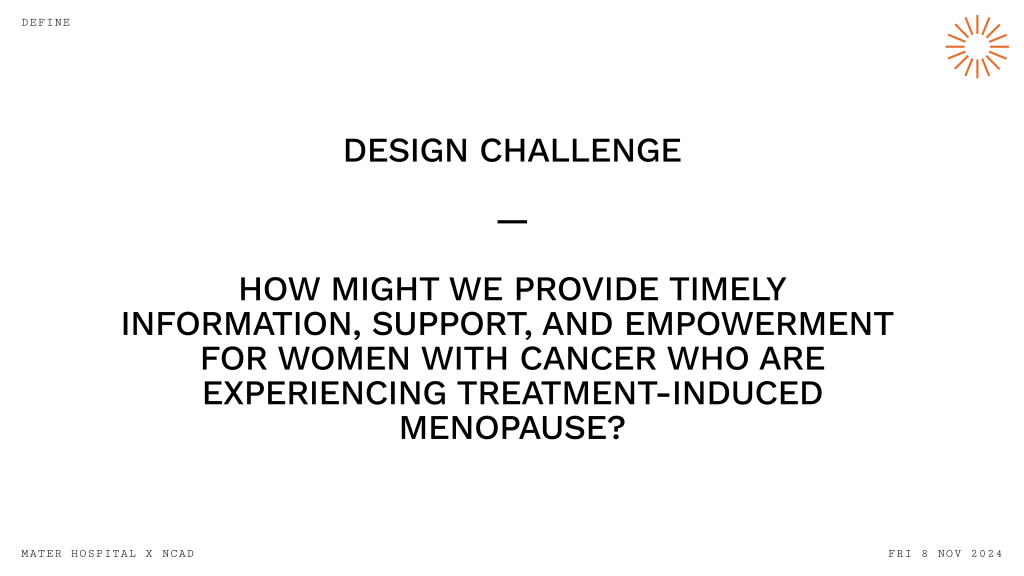
Define: Design challenge
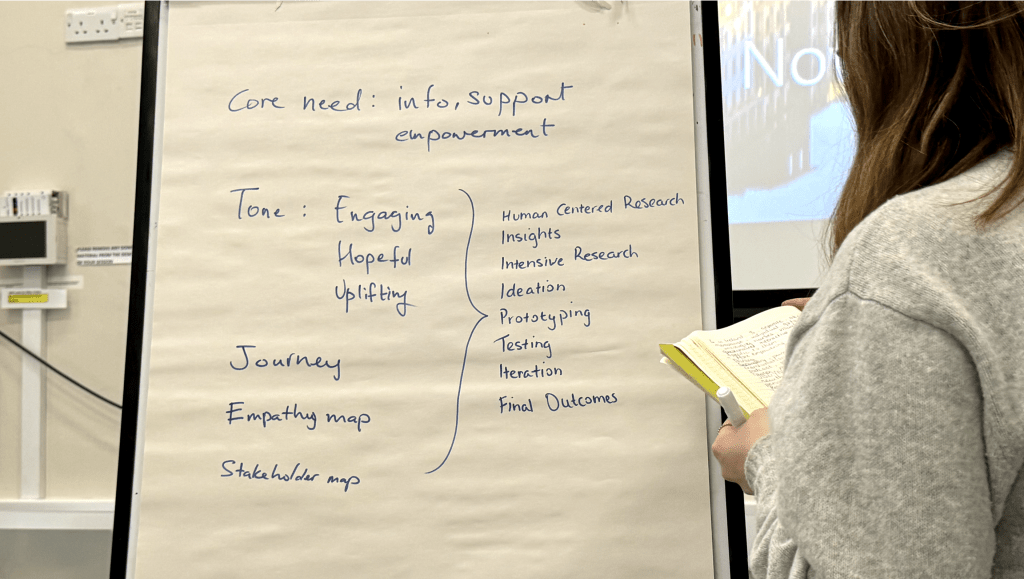
To get to this point was not an easy road. For a while, we could not get in touch with end-users to talk to, and that meant designing in the dark. So as we waited and waited, we were also doing the next best thing. Talking to support groups, talking to volunteers, talking to caretakers—identifying stakeholders involved in the process and talk to them as much as we possibly could. Every morning on my 45-minute walk to the hospital, I would fire up my Spotify and listen to podcast episodes on and around the topic.
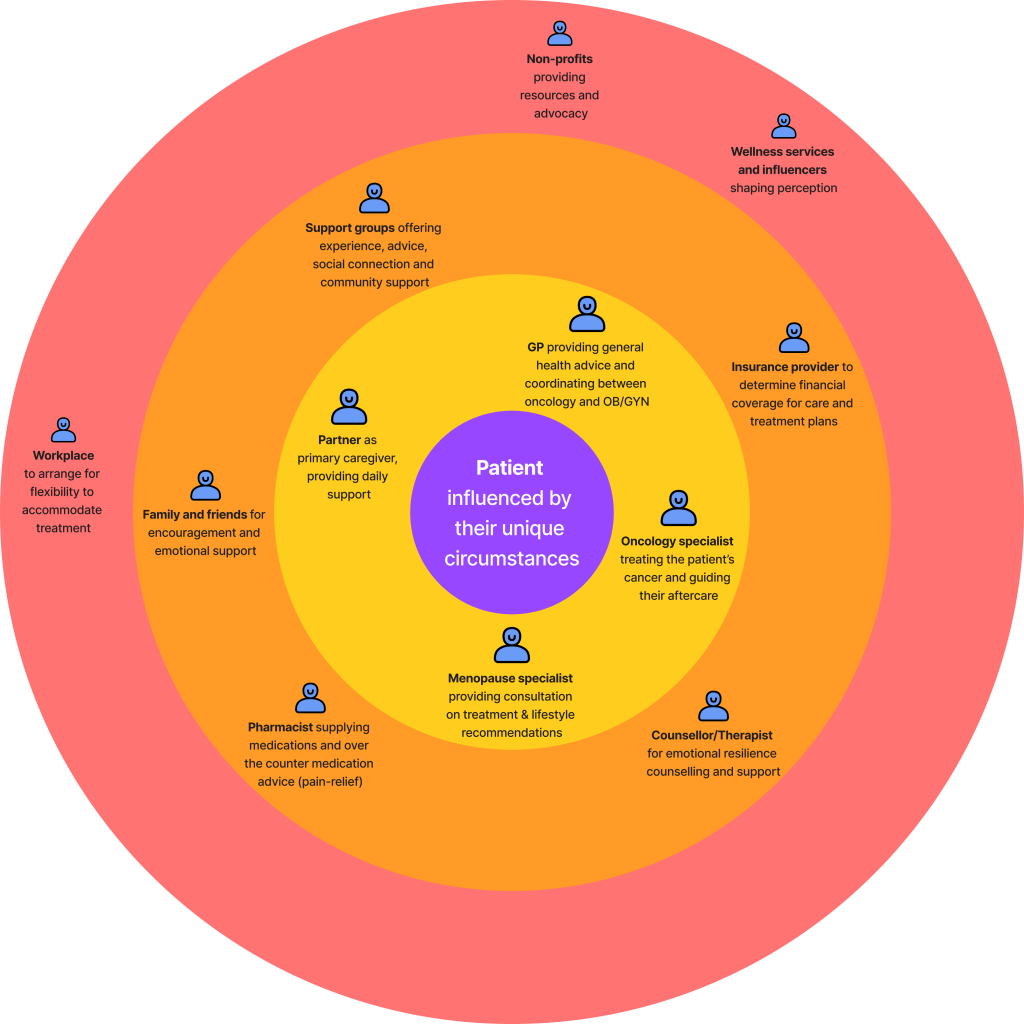
This was where the design toolkit (journey mapping, empathy mapping, stakeholder mapping) really came in handy, as they helped systematise and internalise the fragments of knowledge we’d extracted.
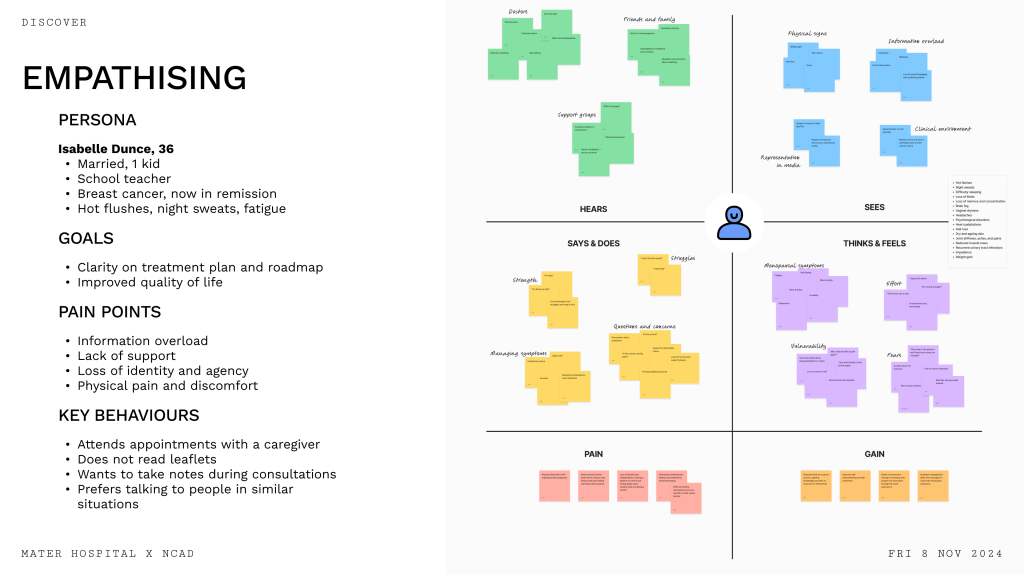
With this, the brief was revisited:
- Who:
Women with cancer, experiencing menopause
- What:
Patient information leaflets
Information, support, empowerment
- Why:
Women going through cancer treatments are likely to experience treatment-induced menopause with symptoms that appear earlier and more severe than regular menopause. Currently, there is not enough information, attention, and representation for this niche segment in mainstream communication channels.
- How:
Specific, tailored, personalised
- Where:
Coffee table, night stand, handbag, car, clinic—accompany them as they go through their daily life and prepare them for doctor’s appointments
- When:
Transitioning phase from patient to survivor, from cancer treatment to menopause treatment, when there is limited medical attention and support
And the design challenge reframed:
DEVELOP: CO-CREATION and CONTENT-LED DESIGN
Through the reframing process, the design challenge maintains its nature of one driven by content. The solution, therefore, requires a content-led approach of relevant, intuitive, progressive disclosure, presenting the right information in the right place, at the right time. From generalised to personalised, from static to interactive, from a patient information leaflet to a patient care package.
If this solution was a person, what kind of person would it be?
—
A caring companion
The concept of the “Better Days” care package emerges as a means to provide timely information, support and empowerment for patients when they get referred to the clinic, awaiting consultation. Adopting a holistic care approach, this package aims to emulate the presence of a doctor or a nurse offering gentle guidance and reassurance. Initial ideation diverged to encompass a range of items that patients can customise and personalise, including: information booklet, consultation forms, journaling prompts, activity calendar, symptom tracker, conversation cards, etc.

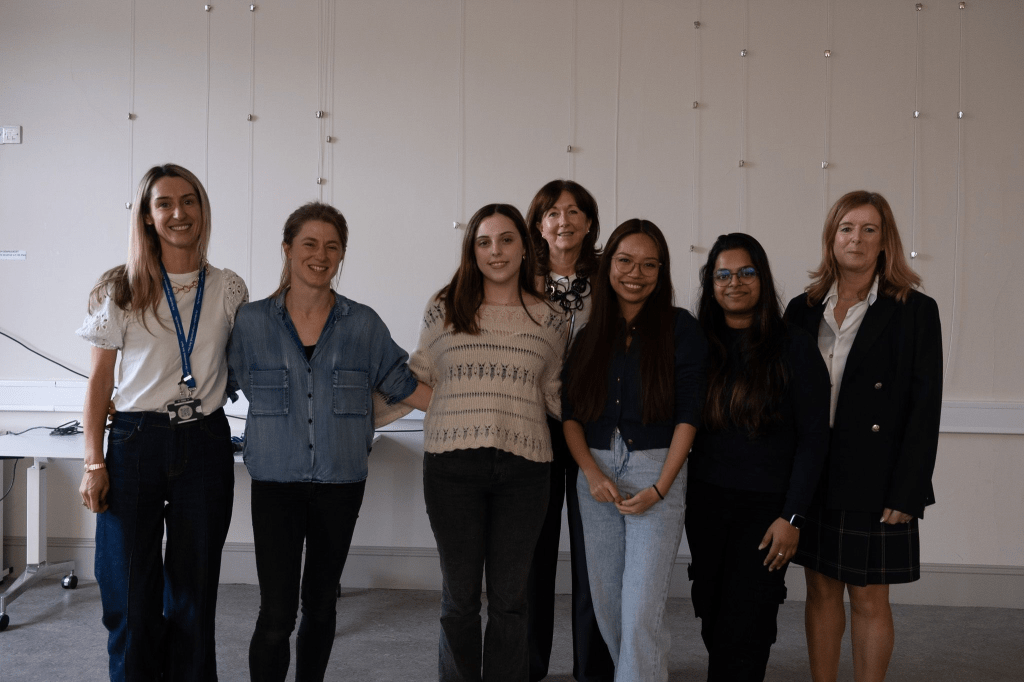
To further distill this concept and accurately construct its components, we were lucky to have the support of our 10 co-creation partners from the Menopause & Cancer Clinic, Gynaecology and Oncology Departments, ARC Cancer Support Centre, and the Mater Transformation Unit , each bringing their unique insights and expertise to the table. Through co-creation exercises with different stakeholders, we were able to uncover more insights to shape and co-construct useful and usable tools that would benefit both doctors and patients, and all involved in the process.
With doctors & nurses:
- What information about the patient’s daily life would be helpful to you in diagnosis and monitoring?
- Daily/weekly/monthly symptom tracking?
With patients:
- What questions or concerns do you have?
- What information would you be looking for?
- What did you find to be helpful?
With support groups and volunteers:
- What activities/advice do you offer for people going through this?
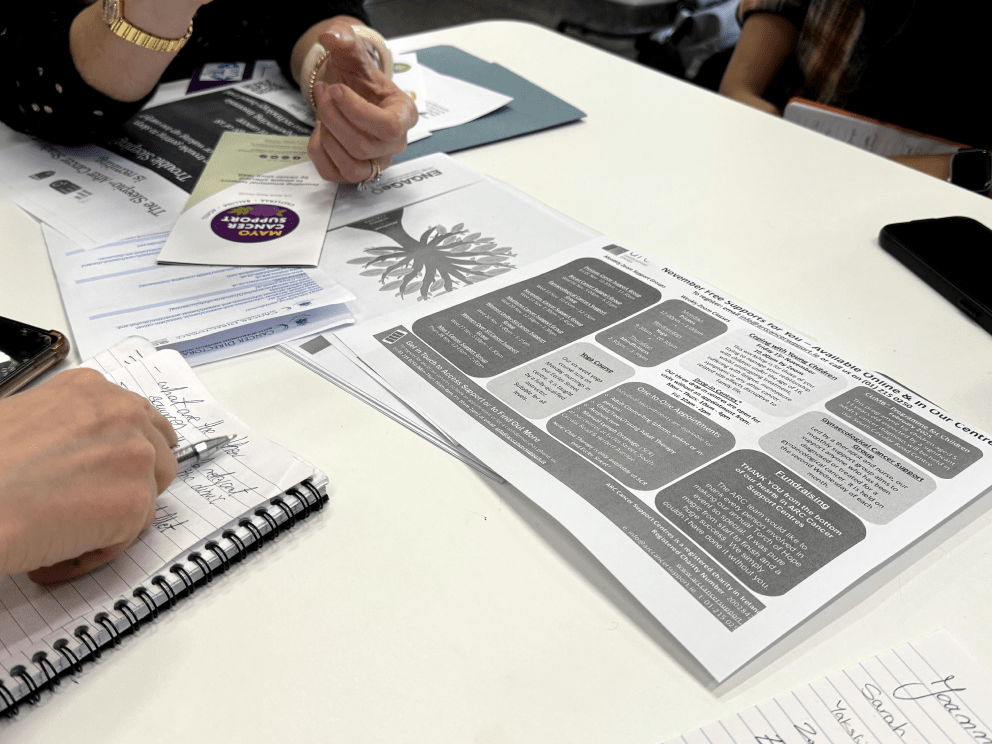
Through rigorous prototyping and continuous testing with patients and doctors, our solutions gradually began to take shape with several core components, transforming traditional leaflets into usable interactive tools.
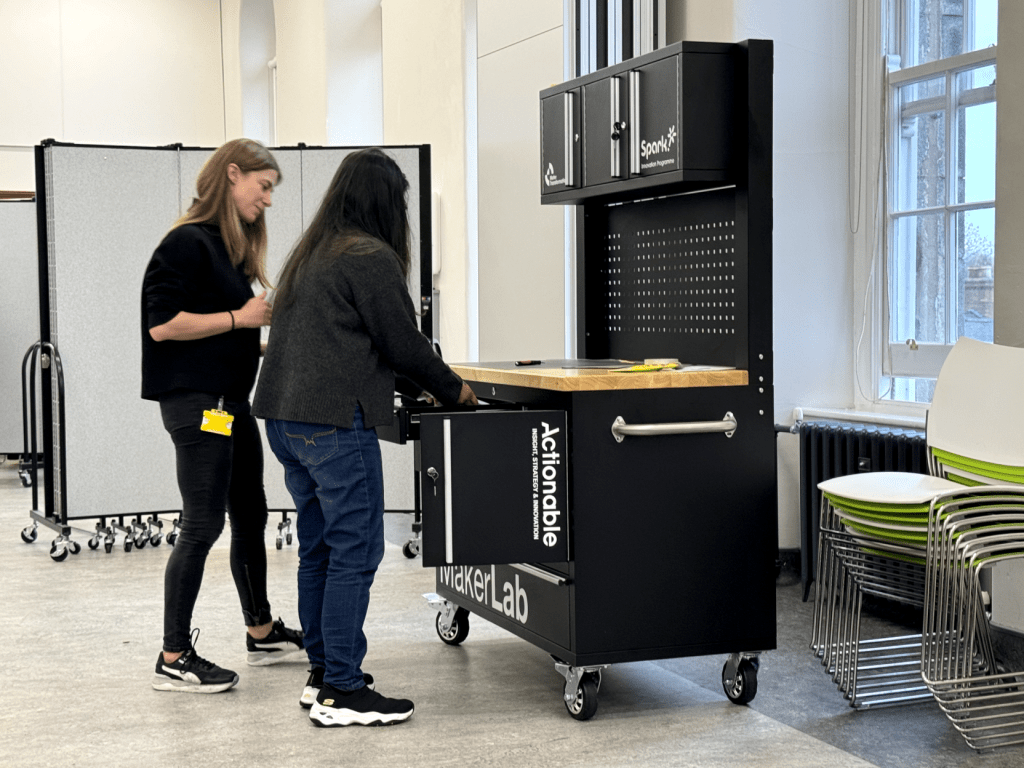
Throughout the process, content design remains a key consideration from ideation to execution, providing principles that guided the design development process.
Q&A Cards
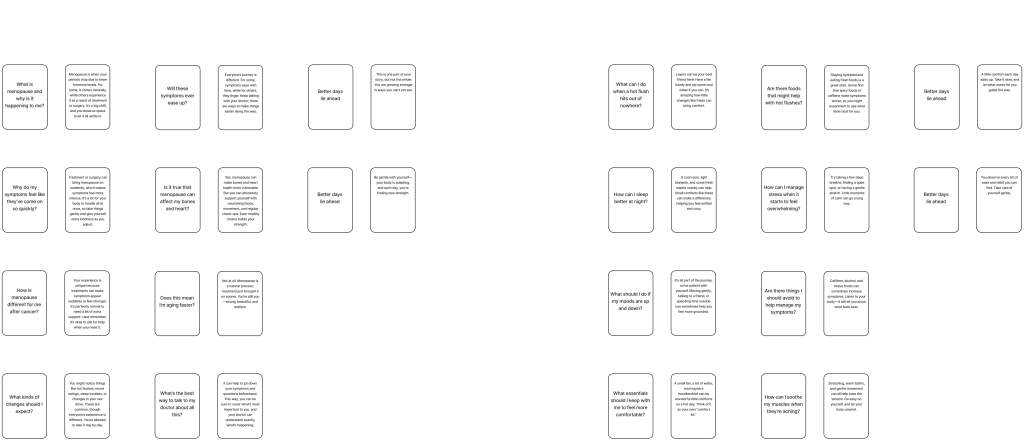
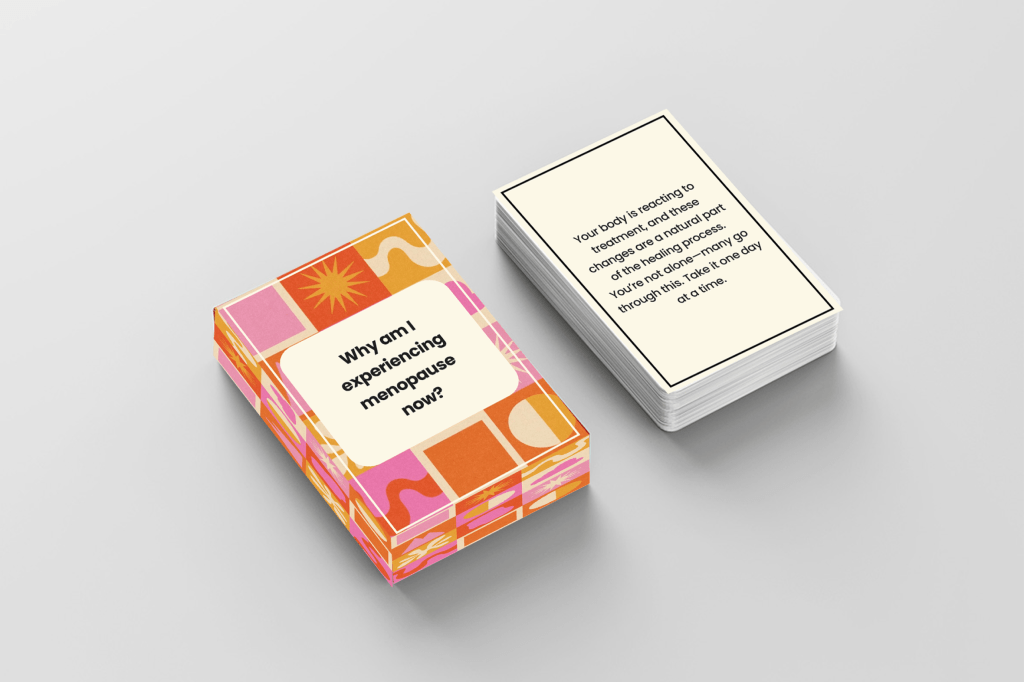
Moving away from fixed wall-of-text types of leaflets, we applied the form of conversation cards to convey the function of crafting conversations through dedicated, specific, relevant questions and answers. The deck of cards naturally invite interaction, where users can freely explore and customise at their own pace, in their own time, like a personal nurse in their pocket.
Personal handbook
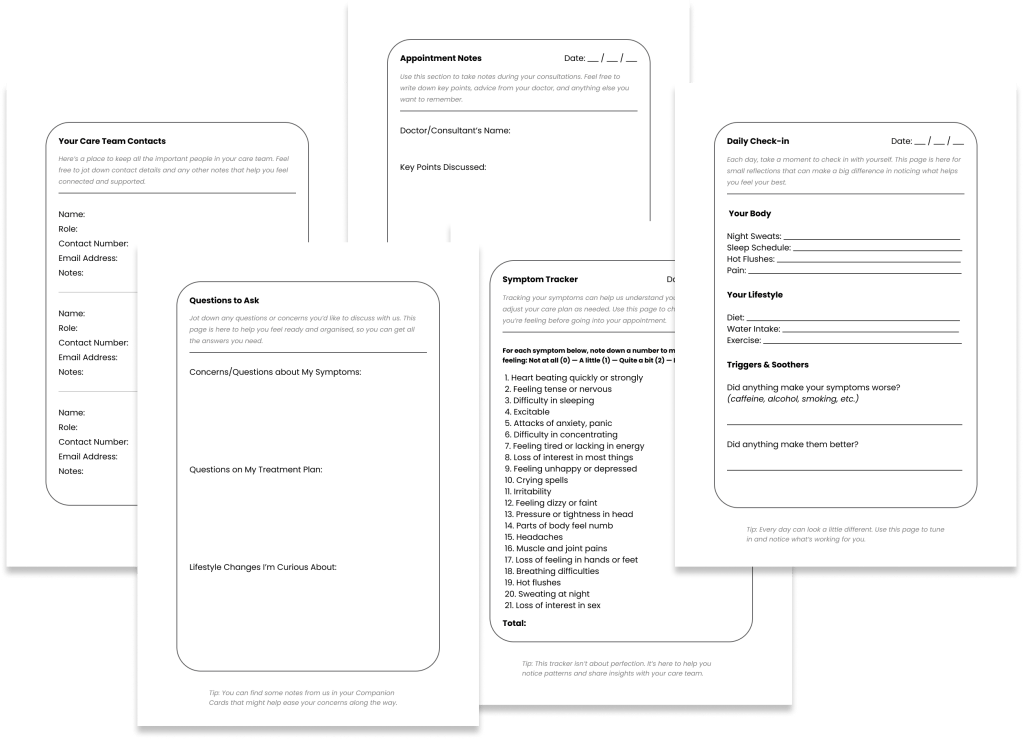
Half of the purpose of the care package was to prepare patients for their upcoming consultation and continuous self-monitoring. The handbook was created to open up a space for them to interact and engage with, while also reclaiming a sense of agency that they might have had to surrender at the beginning of their journey. All topics, areas, and prompts included in this handbook were derived from back-and-forth conversations and co-creation exercises with patients, doctors and nurses to identify what each party would need to ask or answer from their consultation appointments.
DELIVER: THE FINAL RESULT
The Better Days Bag is designed as a thoughtful companion for women navigating menopause after cancer. It’s more than just a collection of resources—it’s a gentle, supportive guide that brings comfort, clarity, and a sense of empowerment during a challenging time.
Inside, patients will find carefully curated tools to help them track symptoms, manage wellbeing, and connect with their care team, all crafted with warmth and empathy.
This bag isn’t just practical—it’s a reminder that each day holds potential for strength, support, and brighter moments ahead.
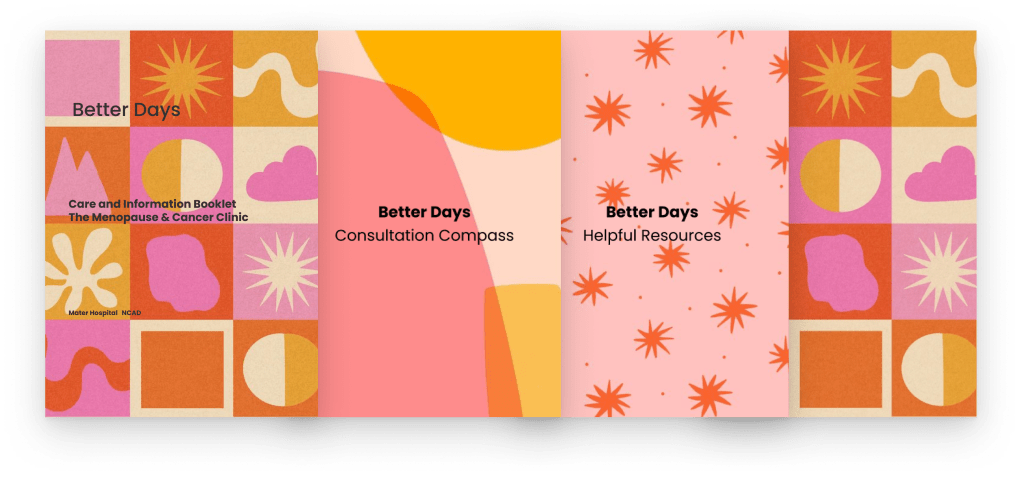
Consultation Compass
The Better Days Consultation Compass is your personal guide through each step of your care journey. Created to help you feel prepared, informed, and at ease, this booklet provides space to jot down questions, track symptoms, and note important information during consultations.
With gentle prompts and helpful resources, the Compass guides you toward clarity and confidence, ensuring that every appointment feels like a step forward. Think of it as a steady hand that helps you navigate the road ahead, one day at a time.
Companion Cards
The Better Days Companion Cards are a pocket-sized source of reassurance and wisdom, offering answers, tips, and reflections for every stage of your experience. Each card addresses common questions and provides simple ideas for comfort, wellness, and emotional support.
Whether you’re looking for guidance on symptom relief or just a gentle reminder that you’re not alone, these cards are here to uplift and empower you. Keep them close—like a caring friend, they’re here whenever you need them.
Fridge Magnet
The Better Days Fridge Magnet is a small, everyday reminder that support is always within reach. With a quick scan of the QR code, you’ll have access to a digital hub filled with helpful resources, guides, and trusted connections to online communities. Placed in the heart of your home, this magnet serves as a steady presence—a symbol that guidance and encouragement are just a moment away.

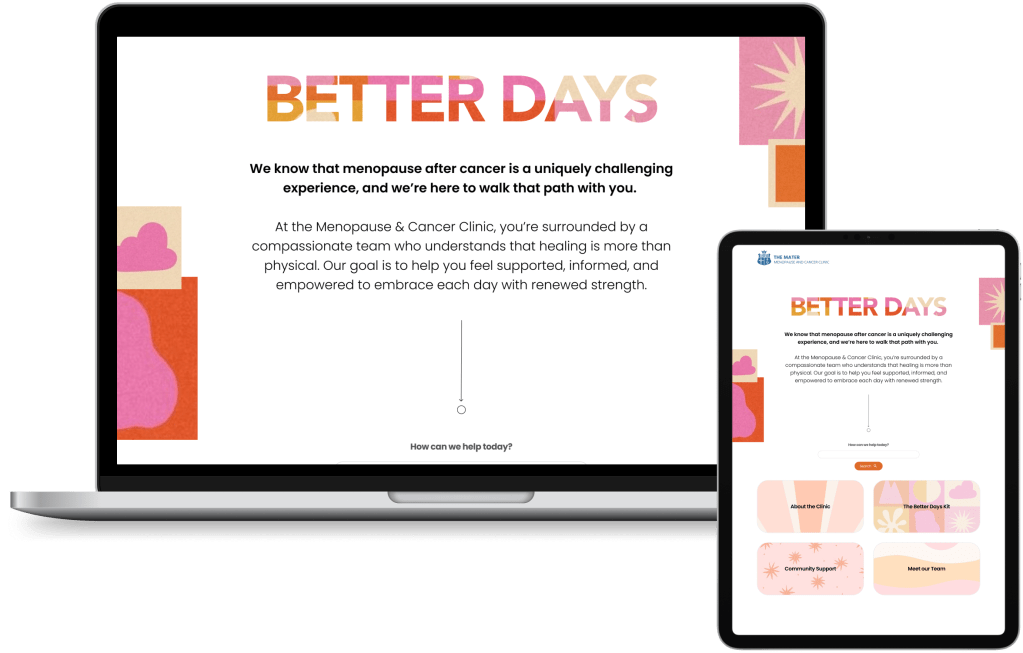
Digital Hub
The Better Days Digital Hub is an online space designed to keep you connected, informed, and supported on your journey. Here, you’ll find downloadable guides, practical templates, and links to trusted communities and resources, all carefully curated to help you feel empowered and at ease. Think of it as an extension of the support you already carry with you, ready to provide answers, comfort, and companionship whenever you need it.
What’s next?
- Enrich—foster connection through companion cards as a community project, presenting voices from real survivors, doctors, nurses, volunteers
- Amplify—through digital hub, develop capacity to create AI-powered personalised care plan focusing on holistic care and lifestyle recommendations
- Broaden—expand the better days bag to include other items through continuous observation and co-design with patients
LESSONS Learned
Empathy, empathy, more empathy
Working in healthcare really teaches you what it’s like to empathise with others. In a way, the limited access to patients we encountered at the start had forced us to rethink empathy and find different avenues for it. But of course, the real breakthrough only happened after we’d had the chance to talk to a real patient. And the inspiration for our design came from a conversation with a contagiously compassionate nurse—we wanted to create something that would give patients the feeling of having this nurse with them every step of the way.
Read the brief
Read it and then truly take the time to dissect it, flip it, deconstruct and reconstruct it. Our brief arrived with a readymade solution waiting for execution, but through a process of rigorous questioning and reframing the problem, we were able to deliver something with so much more tangible value to both end-users and healthcare practitioners at the same time.
Co-creation and participatory design
As the saying goes, our designs do not exist in a black hole, so whatever innovative solution we could come up with would only work with the input of the actual people who will directly and indirectly be using it. From the fuzzy front end, co-creation with patients, doctors, nurses, and carers allowed us to gradually steer, shape, and fine-tune a product that holistically and intuitively worked for all involved, in ways we never could have foreseen when first starting out.
And finally: There’s always room for content design
It’s hard to fully articulate this without going into too much detail on the product itself, but let’s just say that I approached this project first as a content designer and then as an interaction designer. What I am most proud of from this project is how our content strategy has really created the core of the product—whether it’s content to be supplied to patients or content to feed back to healthcare practitioners. Content design is conversation design is interaction design.
 Zoe Tran