
Role
Content Designer · UX Writer
Team
Techcombank
Savings & Investment
Year
2023
Status
Live
Jump straight to
↓ The final result
Overview
In early 2023, our team in Savings & Investment received the brief for a seemingly simple request: to simplify the experience for Bao Loc Certificate of Deposit (CD Bao Loc) on the Techcombank Mobile App.
The existing experience, previously created with limited Product and Content Design input, was deemed rather technical and convoluted. It was not bringing in any numbers. Pushing this forward, stakeholder expectations for our new, revamped and simplified experience included:
- Increase in conversion rate
- Increase in total EOP balance
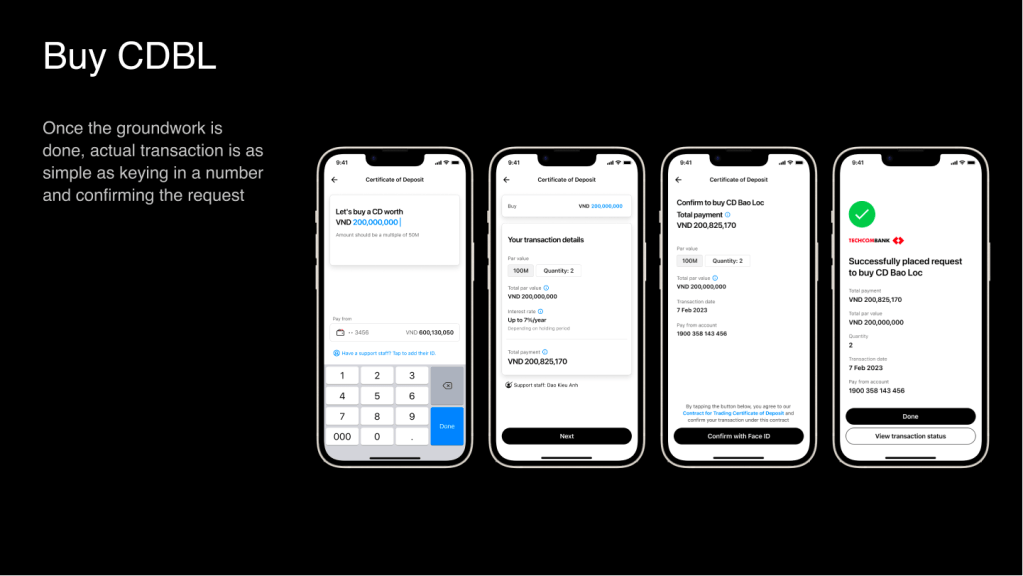
- Facilitate transition from staff-assisted transactions to 100% self-service digital experience on Techcombank Mobile
How I helped
- Product concept mapping
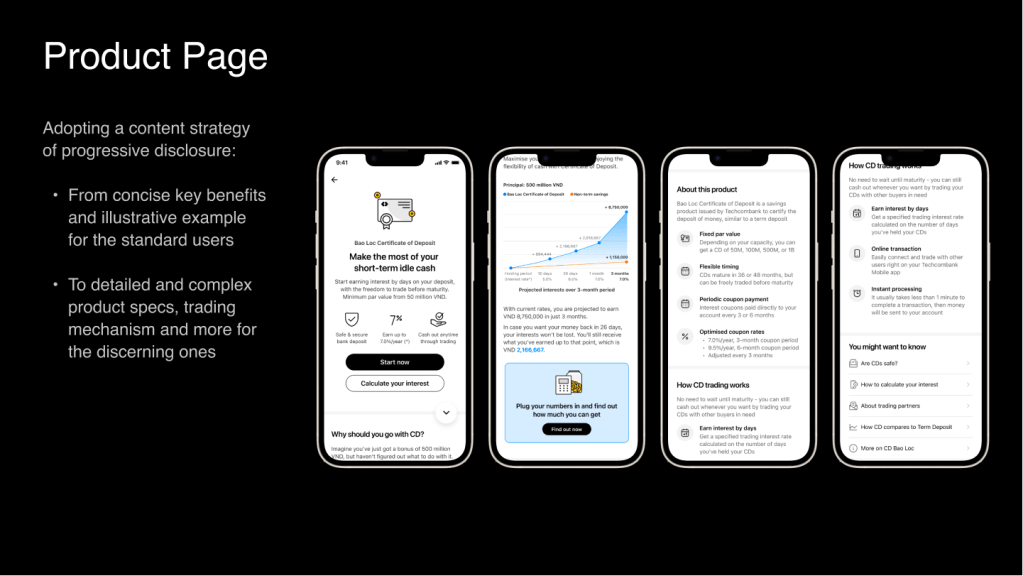
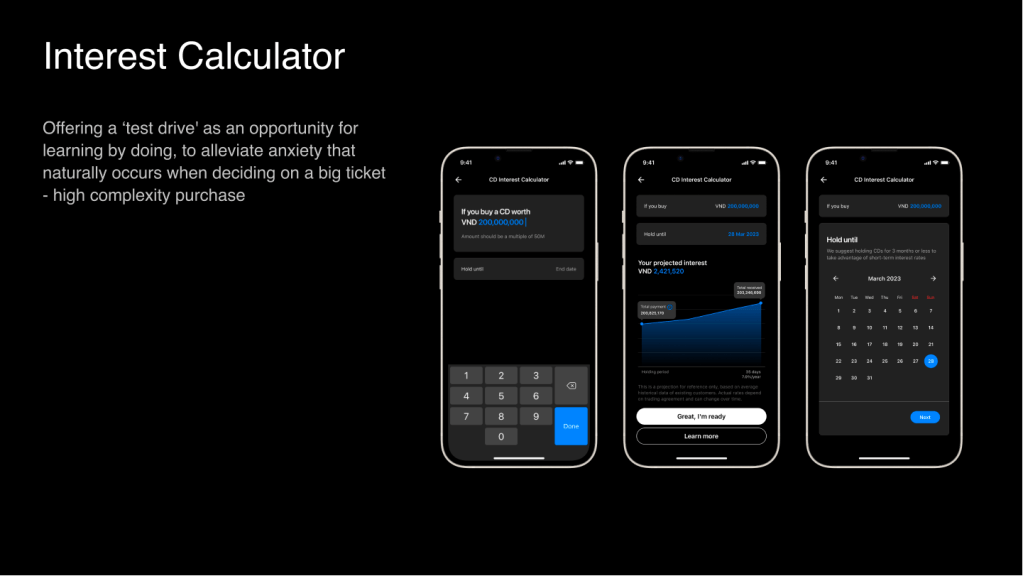
- Content design for Onboarding flow to improve product comprehension and task confidence
- Content design for Savings Product Hub to improve decision-making
- Usability testing documentation & report
About CD Bao Loc
I can bet my bottom dollar that CD Bao Loc is unlike anything you’ve seen or experienced before, and that’s not an overstatement.
The textbook definition of “Certificate of Deposit”, according to Investopedia, is: a savings product that earns interest on a lump sum for a fixed period of time. Essentially, similar to a term deposit, but with a much larger ticket size (minimum 100 mil VND compared to 1 mil VND for term deposit).
For this reason, it is often considered to be a rather “immobile” savings instrument, with high capital but low liquidity.
Enter CD Bao Loc:

CD Bao Loc takes this traditional model one step further by enabling CD holders to transfer ownership, or trade among individual customers. This means that any time you want to cash out, you can easily do it without losing on accrued interest. In essence, it is a hybrid product with attributes of both a savings and an investment. And that’s just the beginning of this complexity that we needed to simplify.
Breaking down assumptions
With these attributes, it was only natural that CD Bao Loc would be targeting our savvy affluent customer segment, given their high transaction frequency and volume. Again, textbook definition describes them as planners, investors, risk-takers, change-makers, tech experts, financial experts, proactive, and progressive, and all of those things.
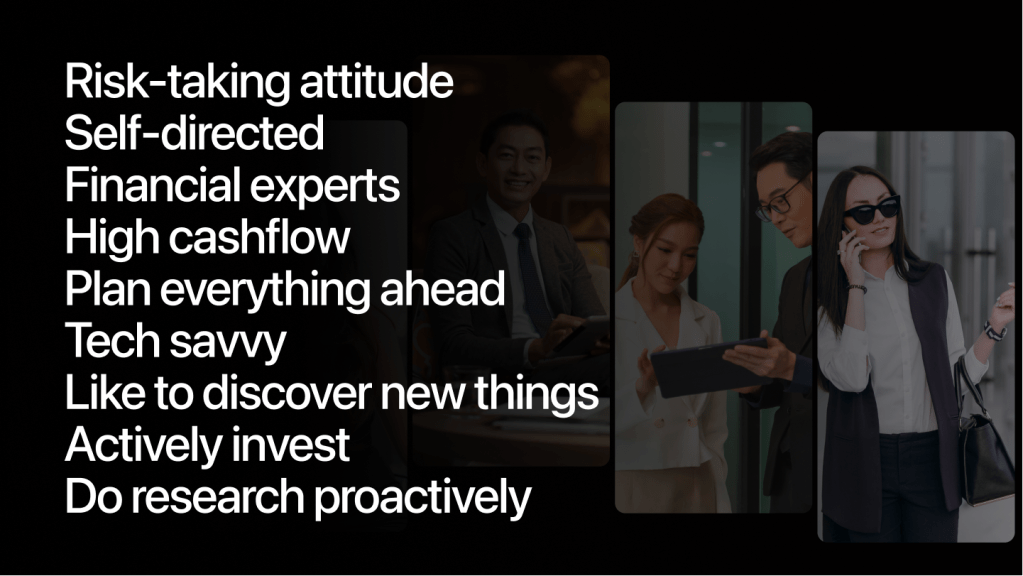
However, when we started conducting research for this product and speaking to real users, we found that our customers did not at all look or act like the persona we had envisioned. They were more like regular, everyday people with the same regular, everyday, and sometimes very basic concerns and questions. And that got us thinking.
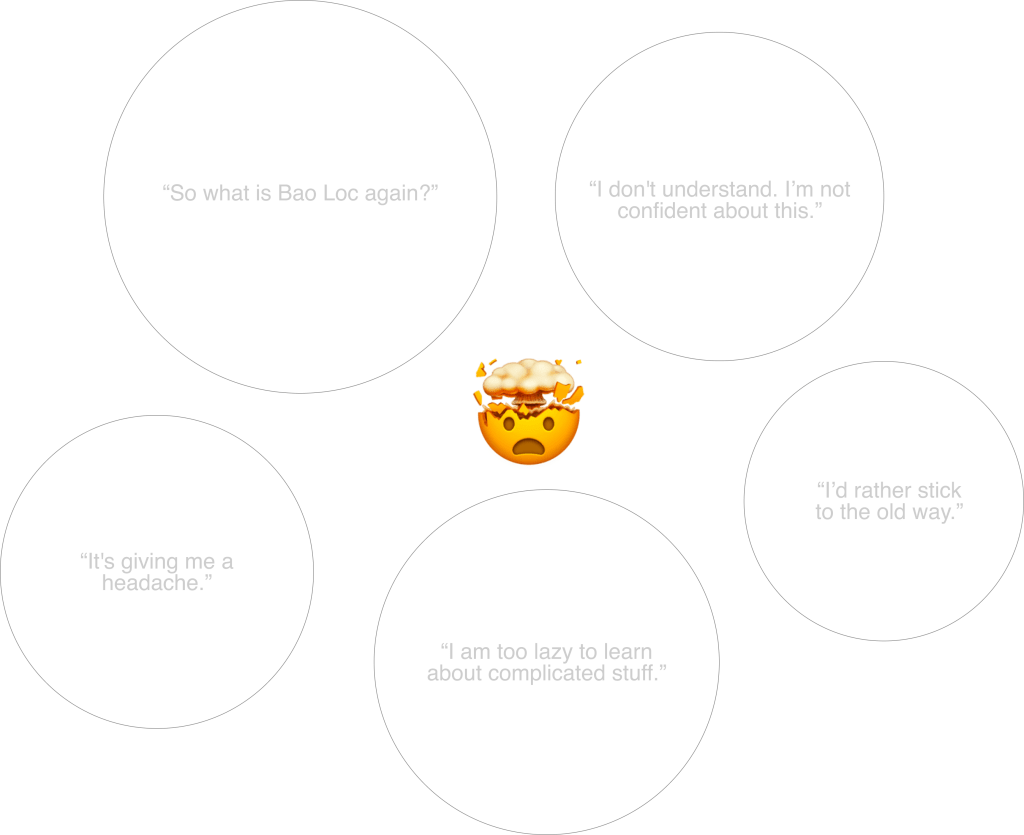
Reframing the problem
When we first started on this project back in January, the request we got was to simplify the experience of CD Bao Loc. But what exactly were we simplifying, when we were still so unclear about the customer base and the product concept itself?
This then required a shift in perspective. It was not just about simplifying. What does simplifying even mean? We needed to reframe it: from “simplifying” to “building a complete end-to-end experience”.
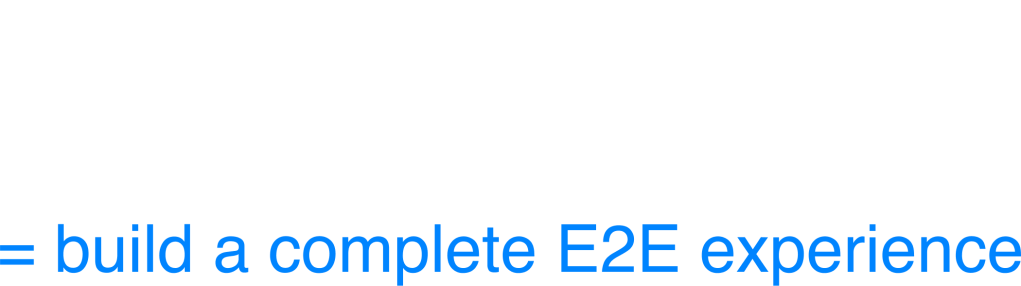
And that meant the set of issues that we were dealing with also changed. It was not about shortening the flows and screens, reducing the number of taps and steps, consolidating platforms or rewriting product copy.
We had to take it back to the very fundamental questions that our customers were asking:
- Is this product for me?
- What are the benefits?
- And how exactly do I do this?
Before
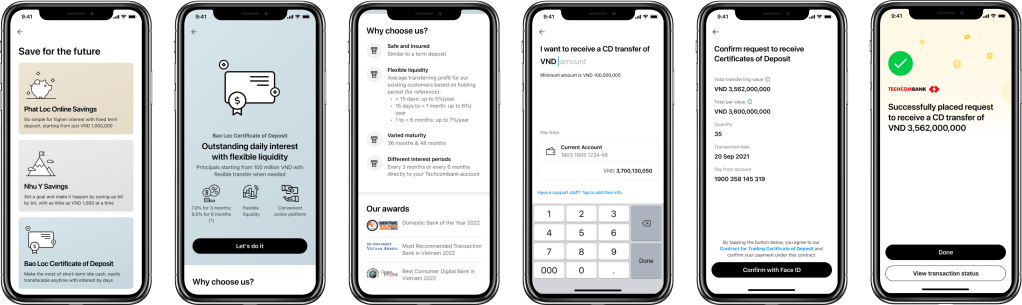
The existing experience as of Dec 2022, developed with little Product and Content Design input:
Testing & Improvements
There were various issues within this existing flow, namely convoluted terminologies and vague actions/progression. Testing showed that users had limited comprehension of the product, and limited confidence in carrying out the task at hand.
But it was not a matter of changing up terminologies and adding in explanations. The root of the problem was in the product concept itself.
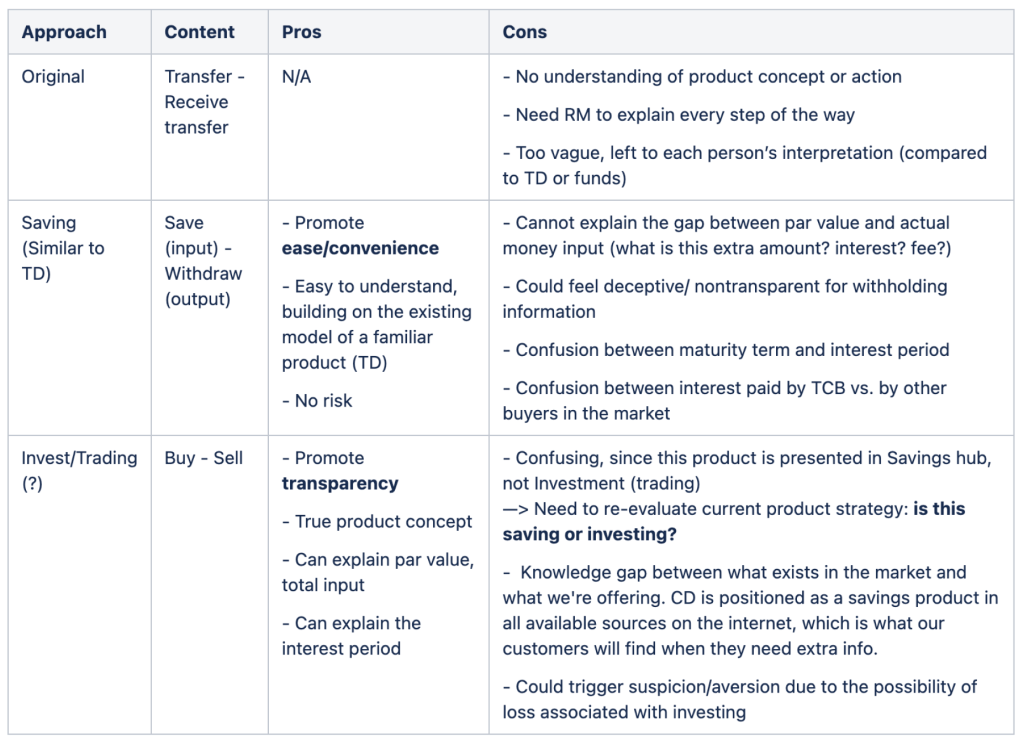
CD Bao Loc was a relatively new product concept in the market, with the added complexity of being a hybrid between savings and investment. The original approach attempted to sell it as a product in its own league, with its own concept and own set of actions (transfer – receive transfer).
- Hypothesis
Our hypothesis was that when faced with a new product, users would tend to link it back to existing concepts, or schemas, that they were already familiar with, for simplicity’s sake. Test results confirmed this hypothesis, as users would either refer to this product as a term deposit (savings) or a fund investment. The question is, which of these two directions should we follow?
- Trade-off
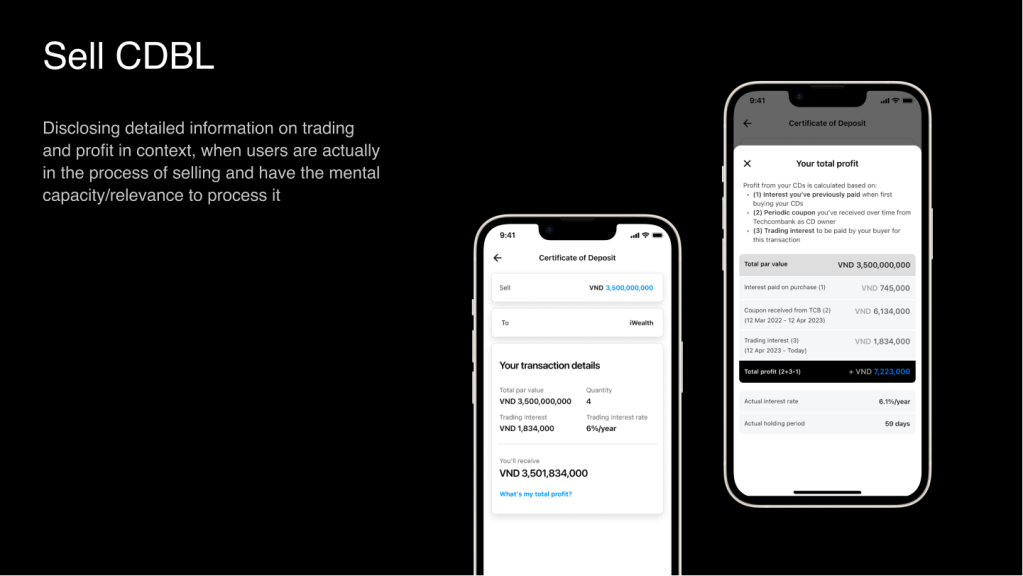
The ultimate trade-off between the Savings Model and the Investment Model is ease vs. transparency. Do we make it simple and convenient to use despite obvious missing links and inexplicable gaps – or do we make it honest, transparent and true to product concept with higher complexity?
- Enhancements
After attempting the Savings Model in a round of testing, and failing to establish trust with our users due to said missing links and inexplicable gaps, we switched to the Investment/Trading Model approach, with several enhancements:
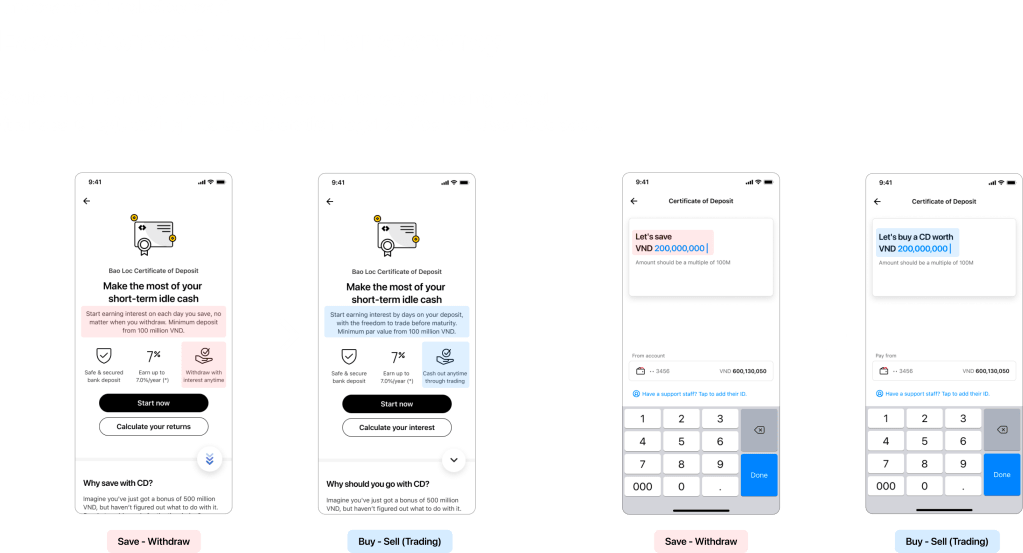
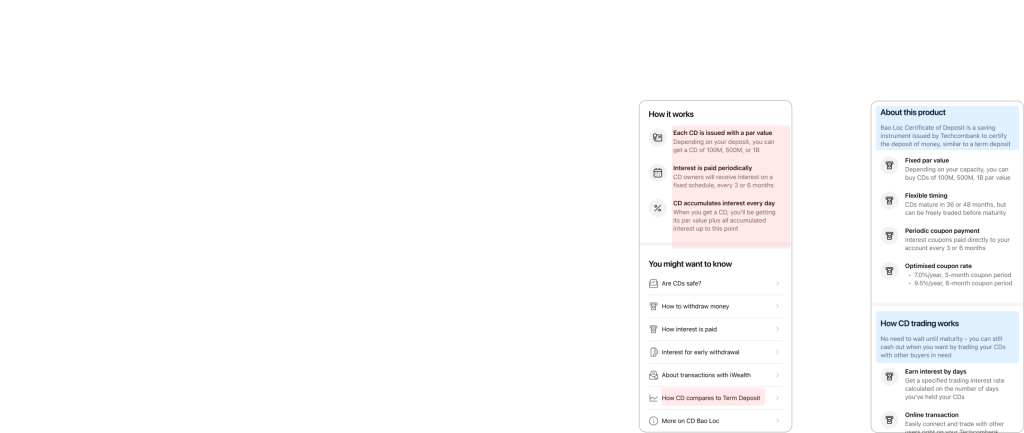
These changes worked within the advised legal framework for Savings and Investment products, and proved to increase comprehension and congruence with user expectations.
The final result
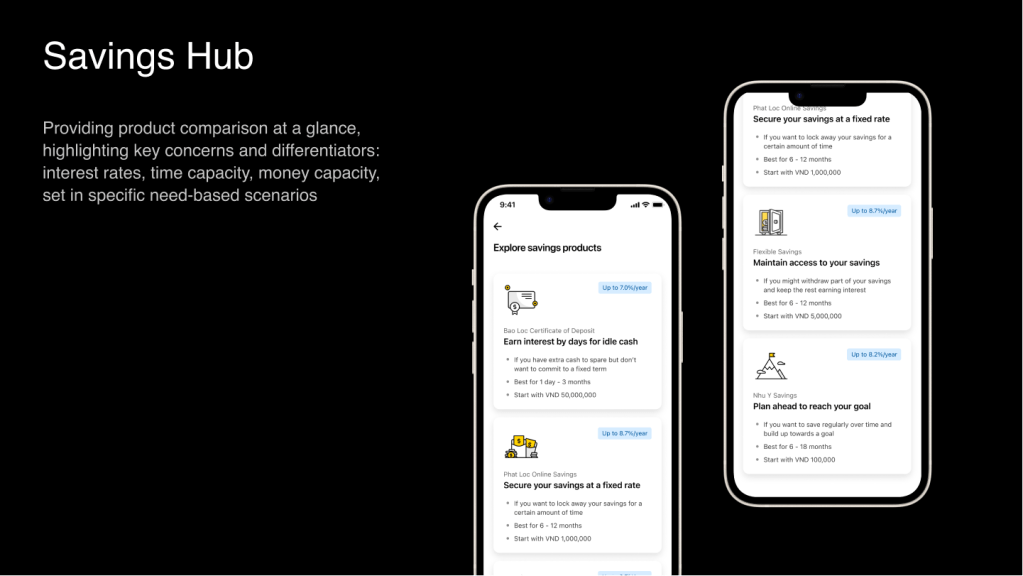
Impact
1 month post release, we saw a 2.5x increase in conversion rate for the CD Bao Loc funnel in the Techcombank Mobile app. The share of CD transactions carried out through the app compared to other channels was also on a steady increase, from just 9% at end of December 2022 to 40% by end of June 2023.
Lesson learned
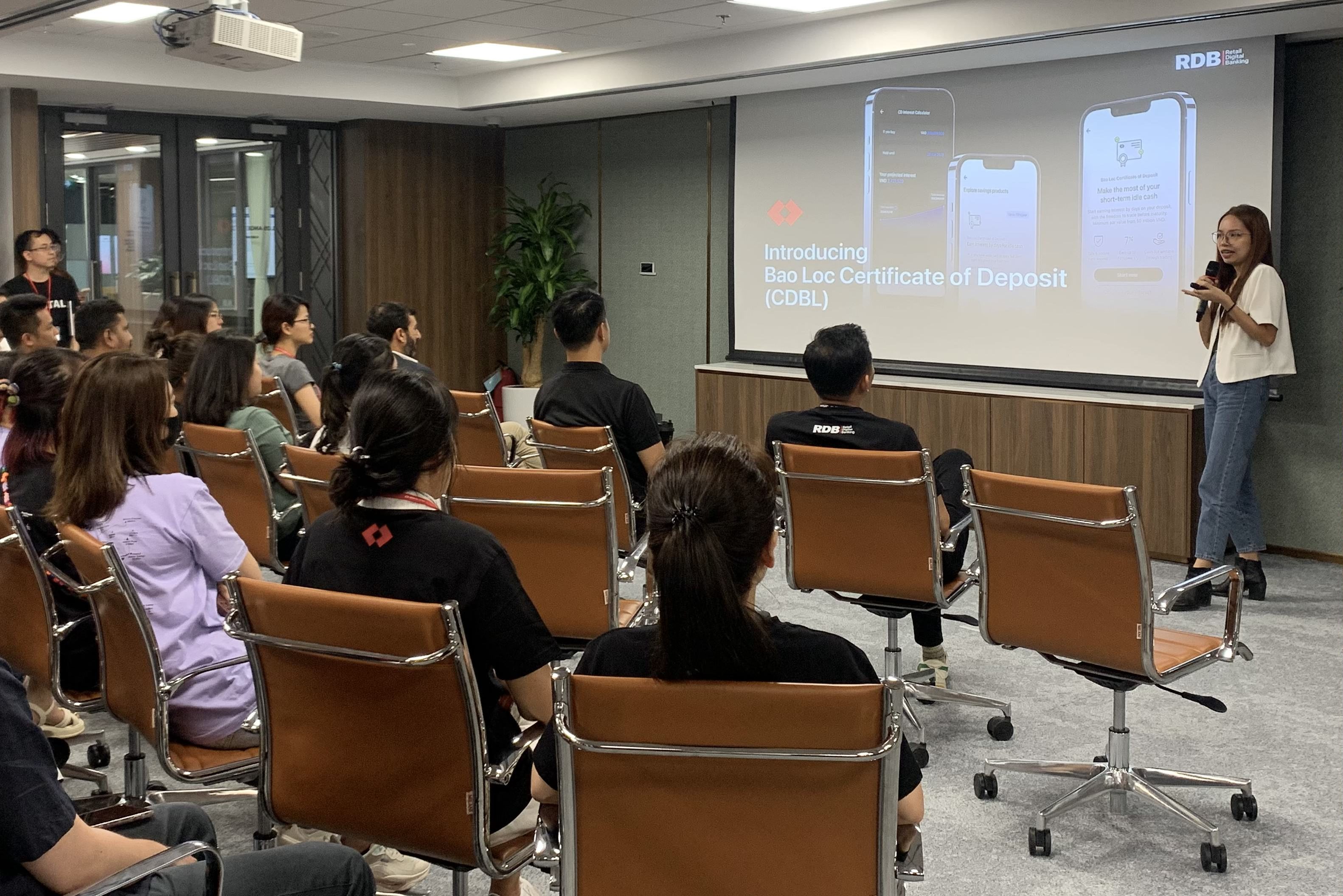
Just before the big launch, I had the chance to present our work on CD Bao Loc to our colleagues in the Digital Office. More than just product publicity, it was an opportunity to garner stakeholder support and offer an insight into the oftentimes seen as mythical world of Product & Experience Design.
That’s why when our Product Designer and I received the brief for this presentation, we had so much we wanted to say. Evangelise the craft. Show how arduous our whole journey has been. Praise all the brilliant improvements we’ve managed to incorporate in this new experience.
But ultimately, it was about our users. None of it would have mattered if we hadn’t tried to understand our users and kept them at the center of the whole process. Without users, there would be no product to deliver, no presentation to give, and no story to tell.
So if there was one thing that I gained from this project, it was that one simple but often overlooked truth.
(And maybe the fact that we should not dive straight in looking for solutions, when the problem is not really discovered and defined.)
 Zoe Tran